DAE uses IP-based Windows 10 mini PC as the FCC for connectivity to control the forecourt devices. This allows for easier integration with existing systems and a more user-friendly experience. Additionally, the scalability and upgradability of Windows mini PCs enable to handle complex operations and adapt to future growth, making upgrades simpler and more cost-effective. We can deliver greater flexibility, functionality, and cost savings for fuel retail operations.

The DAE FCC connectivity comes with two choices – wired or wireless.
WIRED
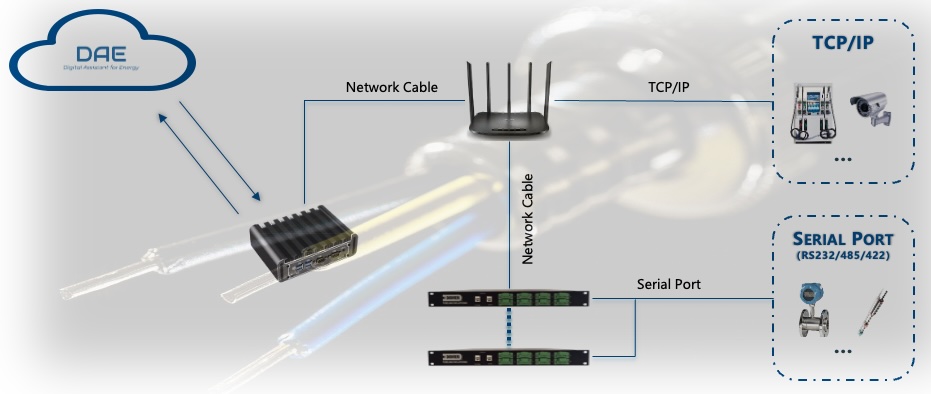
The wired serial port FCC facilitates communication between RS232/RS485 serial ports and network routers, converting serial data for transmission over Ethernet. Its primary advantages include reliable data transmission, as wired connections are less susceptible to interference and signal degradation compared to wireless options. This results in improved stability and performance for critical applications. Additionally, wired connections can enhance security by providing a direct link that is not easily accessible to unauthorized users. Network routers can be configured to restrict access, ensuring that only specified devices can connect. Overall, wired serial port servers offer a dependable and secure solution for integrating serial devices into a networked environment.
WIRELESS
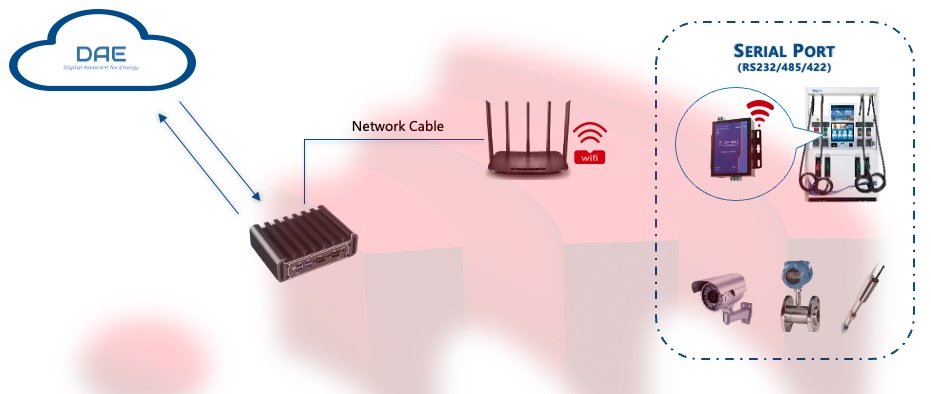
The wireless serial port FCC uses transmission conversion between RS232/RS485 serial ports and WiFi networks. Its main advantages include significant cost savings by eliminating the need for wiring and enhanced security through features like WIFI STA mode (allowing only active connection to a specified network), disabling SSID display on station-level WIFI routers (making the network invisible to outsiders), and specifying allowed clients based on MAC address binding to the serial port server. These features make wireless serial port servers a practical and secure solution for various applications requiring serial-to-WiFi communication.